Narmada–Son Irrigation Tunnel — What Sleemanabad Could Mean for MP Land
The Sleemanabad Tunnel in Katni district — the critical link in Madhya Pradesh's Bargi Diversion Project — is over 96% complete. When operational, it could bring Narmada water to 2.45 lakh hectares across 1,450 villages. But which land will actually benefit?
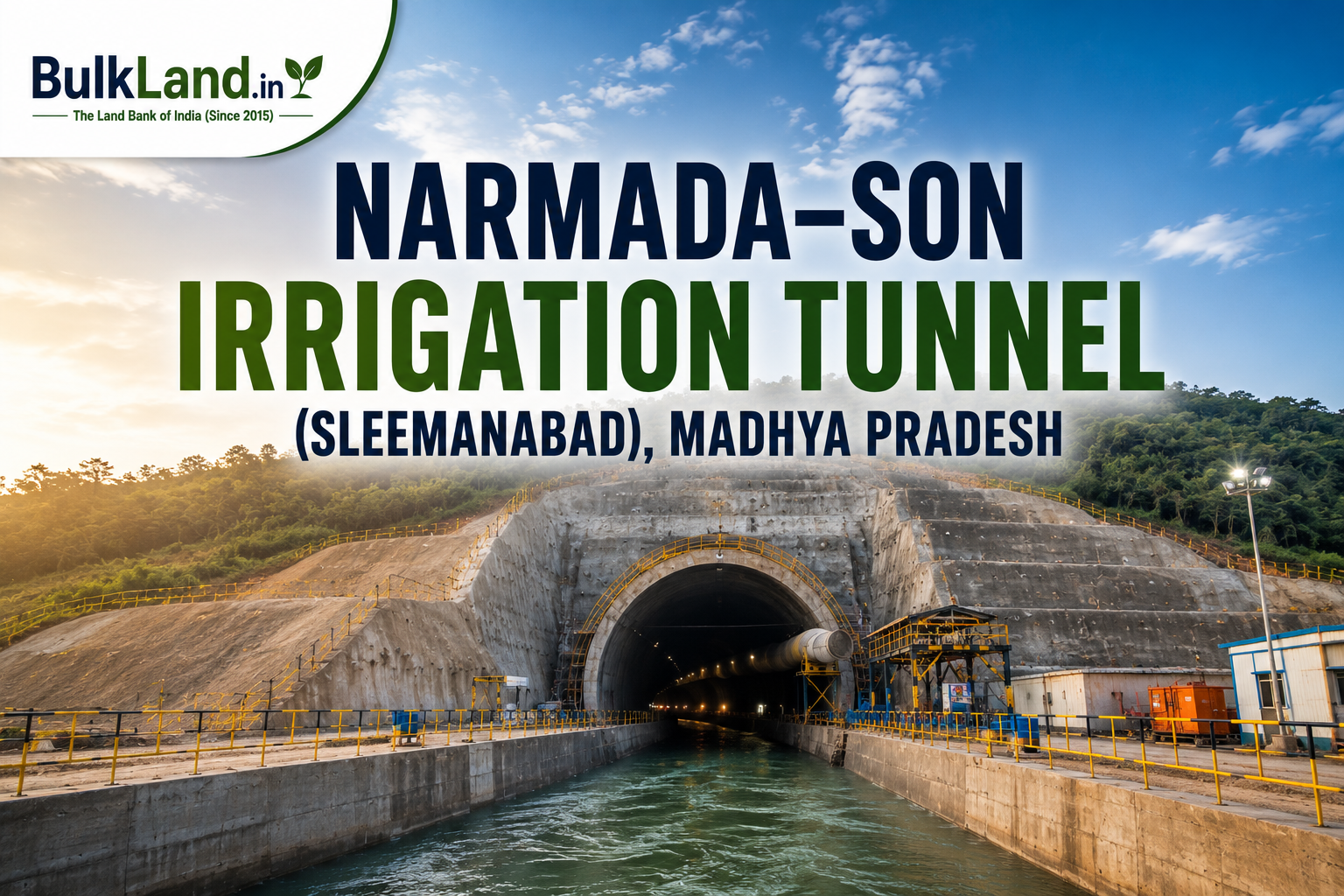
A massive irrigation project in Madhya Pradesh is nearing a milestone that could change the agricultural landscape across parts of the Vindhya region.
The Sleemanabad Tunnel in Katni district, the critical link in the Bargi Diversion Project, is now in its final stage. Once operational, it will carry Narmada water beneath the Vindhya hills into the Son basin by gravity.
For agricultural landowners and buyers, the interesting question is not simply "When will the tunnel open?"
Which lands will actually receive the water — and what could that mean for agriculture?
The Tunnel Is Almost Ready
The 11.95-km underground tunnel has achieved excavation breakthrough, with only finishing works, removal of tunnelling equipment and associated canal works remaining. Overall physical progress is reported at more than 96%, with inauguration expected after the remaining works are completed.
This is significant because the tunnel is the engineering link that allows Narmada water to cross the Vindhya range and reach the Son basin.
The project has moved from "planned" to "nearly operational."
How Much Land Could Benefit?
Once the irrigation network becomes operational, the project is designed to create irrigation potential of approximately 2.45 lakh hectares across around 1,450 villages.
The principal beneficiary districts are expected to include:
| District | State |
|---|---|
| Katni | Madhya Pradesh |
| Satna | Madhya Pradesh |
| Maihar | Madhya Pradesh |
| Rewa | Madhya Pradesh |
| Panna | Madhya Pradesh |
The project will also support drinking and industrial water requirements in parts of Jabalpur and Katni.
Where Could the Land Opportunity Be?
The land story is particularly interesting in areas that currently depend on rainfall or uncertain groundwater. Agricultural parcels in parts of Satna, Maihar, Katni, Rewa and Panna that fall within the new command network could potentially see:
Better water security → Greater cropping potential → Improved farm productivity → Stronger agricultural demand
However, the benefit will not be uniform across an entire district.
The command area matters more than the district name. A parcel located within the final irrigation command could have a very different future from another parcel only a few kilometres away but outside the network.
What Should Land Buyers Look For?
If you are considering agricultural land because of the Narmada–Son project, focus on four things:
- 1. Confirm the Command Area — Check whether the village and, ideally, the specific survey number fall within the Bargi Diversion/Narmada–Son command.
- 2. Look for Water-Limited Land — Rainfed or groundwater-dependent agricultural land could potentially gain more from reliable canal irrigation.
- 3. Check Road Connectivity — Better agricultural productivity is more valuable when the land can also be accessed easily for machinery and transportation.
- 4. Verify Title — Water potential does not compensate for unclear ownership or legal complications.
An Important Caution
It would be a mistake to assume that every village in the five beneficiary districts will automatically receive Narmada water. The command area is being developed in phases, and the final benefit depends on the canal, distributary and local distribution network.
Don't buy land because it is "near the Narmada–Son project." Buy only after confirming that the land actually falls within the irrigation command. Land values may respond positively where reliable irrigation improves agricultural economics, but appreciation cannot be assumed in advance.
Why This Project Matters Beyond Irrigation
The potential impact goes beyond simply adding another water source. The project could help:
- Reduce dependence on the monsoon
- Increase cropping intensity
- Improve agricultural productivity
- Strengthen water security for farming communities
- Support drinking-water requirements in parts of Jabalpur and Katni
- Provide a more stable agricultural base across traditionally water-stressed areas
For farmers, water security can be more important than land-price speculation.
Our View
The Sleemanabad Tunnel represents a major irrigation milestone for Madhya Pradesh. After years of construction, the core tunnel is now nearing completion and the focus is shifting towards the distribution network and actual delivery of water.
For agricultural land buyers, the opportunity is selective rather than district-wide. The most interesting land may be where three things come together:
Confirmed irrigation command + suitable agricultural land + good connectivity. The real test will begin when water starts reaching the fields.
Before you value the land, verify the water.
Looking for Agricultural Land in the Narmada–Son Command Areas?
Explore listings or post your requirement on BulkLand.in. Always verify the latest project status, command-area maps, survey-number coverage, title and local land records before proceeding with any transaction.
Browse Madhya Pradesh Land Listings
This article is based on publicly reported information available as of August 2026. Project timelines, water allocation and village-level benefits may change. This article is for general information only and does not constitute investment, financial, agricultural or legal advice. Buyers should independently verify the relevant records with the Narmada Valley Development Authority, Irrigation Department and local Revenue authorities.